NECO Physics Practical 2026: Expected Apparatus, Questions & Common Mistakes to Avoid
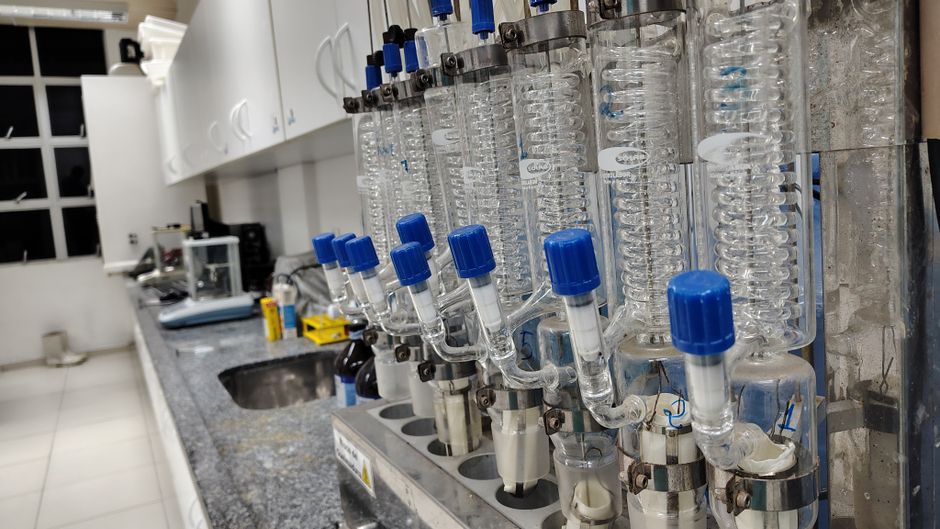
The NECO Physics Practical is a crucial component of your Senior School Certificate Examination (SSCE). It's not just about knowing formulas; it's about demonstrating your ability to handle apparatus, take precise measurements, and interpret data. This guide breaks down exactly what to expect on exam day, from the apparatus list to the type of questions, and highlights the common mistakes that can cost you valuable marks. Let's get you ready to walk into that lab with confidence.
What Apparatus to Expect in the NECO Physics Practical
NECO is known for testing your familiarity with standard physics equipment. While the specific list can vary by year, they generally stick to a core set of apparatus. Knowing what they are and how to use them is your first step to success. Familiarise yourself with the correct names and units of measurement for each item.
Mechanics and Optics
- Metre Rule and Vernier Callipers: For measuring length, internal/external diameter, and depth. You must know how to read a Vernier scale to 0.01 cm.
- Micrometer Screw Gauge: For measuring very small thicknesses (e.g., wire diameter) to 0.001 cm. Pay attention to the zero error.
- Retort Stand and Clamps: Used to hold apparatus like pendulums or springs securely. Ensure your setup is stable to avoid parallax errors.
- Optical Pins and Plane Mirror: For ray diagrams and locating images. Practice using pins to trace light rays accurately.
- Lenses and Lens Holder: For experiments on focal length. Remember the different methods (e.g., plane mirror method, distant object method).
Electricity and Heat
- Potentiometer or Metre Bridge: For comparing EMFs or measuring resistance. This is a classic NECO topic. You must understand the circuit diagram.
- Resistors and Resistor Box: Used in circuits. Know the colour codes for resistors.
- Key (Switch), Ammeter, and Voltmeter: For measuring current and potential difference. Always check the zero error and the range you're using.
- Galvanometer: A sensitive current detector. Know how to protect it from damage.
- Thermometer and Calorimeter: For heat experiments. Know how to measure temperature accurately and stir properly for uniform heat distribution.
- Boiling Tube and Beakers: For heating liquids. Never point a boiling tube at yourself or others.
Likely Questions and Topics for the NECO Physics Practical
NECO practicals are usually based on two or three main questions from different areas of physics. The questions are designed to test your manipulative skills and your understanding of the underlying theory.
Common Practical Areas
- Static and Friction: Questions on the coefficient of static friction, often involving a block on an inclined plane.
- Simple Pendulum: Investigating the relationship between the period and length of a pendulum. You'll be asked to plot a graph of T² against L and determine the acceleration due to gravity (g).
- Hooke's Law: Using a spiral spring to determine its force constant (k). This involves measuring extensions for various loads.
- Ohm's Law and Resistance: Using a metre bridge to determine the resistance of a wire or to verify the laws of series and parallel connections.
- Convex Lens: Determining the focal length of a convex lens using the lens formula or graphical methods.
The Top 5 Common Mistakes That Cost You Marks
Many students lose marks not because they don't know the physics, but because of avoidable errors. Here’s what to watch out for:
- Poor Table Construction: Your results table must have a clear heading, correct units in the header (not in every cell), and consistent decimal places. Use a ruler to draw the table lines.
- Graphing Errors: This is a major mark-winner. Use a sharp pencil, a long ruler (30cm), and choose a scale that gives you a large graph (at least half a page). Label your axes with quantity and unit (e.g., Length / cm). Plot points with clear crosses (×) and draw a best-fit line. Never force a curve through every point.
- Incorrect Significant Figures: Your answer can only be as precise as your least precise measurement. If your metre rule measures to 0.1 cm, don't write 2.57 cm in your table. Write 2.5 cm. Carry this logic through to your calculations.
- Misreading the Vernier Callipers: A classic error. Always check the zero error first and add or subtract it from your reading. Also, ensure you are reading the correct scale (main scale + Vernier scale).
- Ignoring the Theory Section: The practical often has a theory part asking for definitions, precautions, or the underlying principle. Don't skip these. Write concise, standard definitions, e.g., "The focal length of a lens is the distance between the optical centre and the principal focus."
How to Prepare for the NECO Physics Practical
You can't just read your way through a practical exam; you need to practice. Here’s a simple, effective strategy:
- Revise the Theory: Make sure you understand the concepts behind the experiments. What is Hooke's Law? What is the lens formula? This helps you answer the theory questions and interpret your data.
- Practice with Past Questions: Go through past NECO practical questions. Even if you don't have a lab, you can practice the calculations, graph plotting, and table construction on paper.
- Master Graph Plotting: This is a skill you can perfect at home. Practice plotting graphs with different scales and calculating the slope (gradient) from your best-fit line. The slope calculation is a standard question.
- Know Your Units: Be meticulous about units. Current is in Amperes (A), resistance in Ohms (Ω), and length in metres (m) or centimetres (cm).
- Take a Mock Exam: The best way to prepare is to simulate the exam environment. Tueri Prep offers NECO-style mock practicals that give you a realistic feel for the time pressure and question format.
Frequently Asked Questions
Are the apparatus and questions the same for all NECO centres?
Yes, NECO ensures that all candidates across Nigeria are examined on the same set of apparatus and questions for a given subject and paper. This ensures fairness and standardisation. However, the specific values you measure (like the resistance of a particular wire) may vary slightly from centre to centre.
What happens if I make a mistake in my measurements during the exam?
Don't panic. You can repeat a measurement if you have time. Always record your raw data in pencil first. If you make an error in your table, simply cross it out neatly and write the new value above it. Avoid using correction fluid as it can look messy. Your final answer, graph, and conclusion are what matter most.
Is it necessary to write a conclusion for the NECO Physics Practical?
Yes, a well-written conclusion is important. It should state what your experiment has shown, relating it to the aim of the question. For example, "From the graph, the acceleration due to gravity was determined to be 9.8 m/s²." It shows the examiner that you understand the point of the experiment.
How can I get more practice for the NECO Physics Practical?
The best way is to practice with realistic mock exams. Platforms like Tueri Prep offer subject-specific mocks that simulate the NECO format. This helps you get comfortable with the structure, timing, and type of calculations required, building your confidence before the actual day.
Walking into your NECO Physics Practical feeling prepared is half the battle. By knowing your apparatus, practicing your graphing, and avoiding these common pitfalls, you're setting yourself up for a strong result. Keep practicing, stay calm, and trust in your preparation.
Get instant access to thousands of real WAEC, JAMB, and NECO past questions with AI-powered explanations.
Start Free →